What foreclosure defense costs in Florida and what changes the price
By Elena Haddad · Updated 2026-06-16
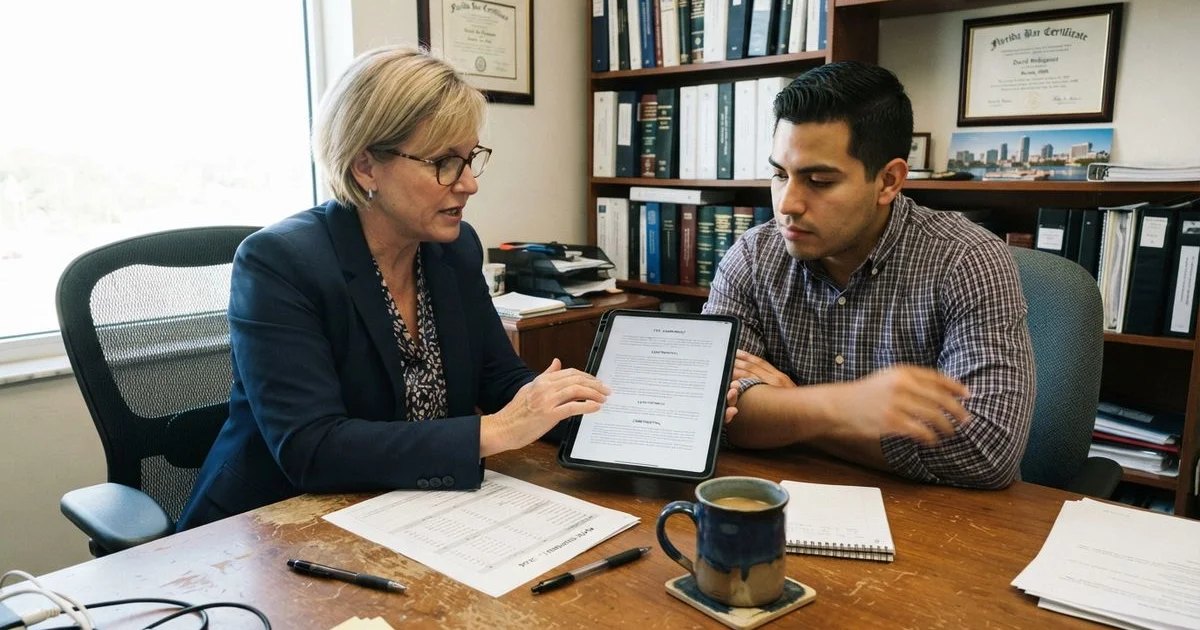
Cost is usually the first question homeowners ask, and the honest answer is: it depends heavily on how contested your case becomes. A foreclosure that ends with an early settlement or loan modification costs far less to defend than one that goes through mediation, discovery, and a trial. Here’s how attorneys in this space typically structure fees, and what actually moves the number.
The two common billing models
Flat fee. A set price for a defined scope of work, often covering filing an answer to the complaint, attending mediation, and basic case management. Flat fees give you cost certainty for that phase, but ask what happens if the case goes past it, since many flat fee agreements only cover a first stage and require a new fee if the case escalates to trial.
Hourly billing. More common for contested cases likely to go to trial, or cases with unusual complications like a second mortgage, a prior bankruptcy, or a dispute over who actually owns the loan. Hourly billing means the final cost tracks how much work the case actually takes, which is harder to predict at the start.
Some foreclosure defense firms also offer a hybrid: a flat fee for the initial defense phase, then hourly or a second flat fee if the case moves to a contested phase like discovery or trial.
What drives the price up or down
| Factor | Tends to lower cost | Tends to raise cost |
|---|---|---|
| How far behind you are | Caught early, fewer months behind | Many months behind, more arrears to work through |
| Whether you contest the case | Uncontested or early settlement | Contested through discovery and trial |
| Number of loans on the property | Single first mortgage | Second mortgage, HELOC, or liens also involved |
| Lender type | Bank or major servicer with standard procedures | Private or hard money lender with less standardized process |
| Your goal | Loan modification negotiation only | Full litigation defense plus modification attempt |
If you want a rough starting point before you call anyone, a cost estimator that walks through these same factors, case type and lender, can give you a ballpark range to compare against what a firm quotes you.
Contested cases that go through discovery, mediation, and possibly trial take the longest and cost the most. Our guide to Florida’s judicial foreclosure process step by step walks through what happens at each of those stages.
What the retainer typically covers, and what it doesn’t
A signed fee agreement should spell out exactly which stages of the case are included. A common structure covers the initial answer, standard discovery, and mediation, while a trial or an appeal is billed separately if the case gets that far. Some firms also separate out costs like court filing fees, process server charges, and expert witness fees from their own attorney fee, since those are paid to third parties regardless of who represents you. Reading this section of the agreement closely, and asking about anything unclear before signing, avoids a surprise bill months into a case that took longer than expected.
Questions worth asking before you sign
Ask exactly what’s included in a flat fee and what triggers an additional charge. Ask whether the attorney personally appears in court or sends a case manager instead, since that can affect both cost and outcome. Ask how billing works if you switch strategies partway through, for example if a loan modification attempt fails and the case needs to go to trial. And ask directly what the firm’s average timeline and total cost look like for cases similar to yours, since a firm that only quotes the starting fee without context isn’t giving you the full picture.
Fees are not the whole story
A cheaper flat fee doesn’t automatically mean a better deal. The corpus of client feedback across firms in this space repeatedly points to responsive communication and clear explanations as what actually separates a good experience from a frustrating one, more than the sticker price. A firm that answers your calls and explains what’s happening at each stage tends to be worth paying slightly more for than one that goes quiet once the retainer is signed.
This is general information, not a quote or legal advice for your specific case. Actual fees vary by firm, county, and case complexity, so get a written fee agreement before you commit. For details on how listed firms are scored in this directory, see our methodology, and browse the full list of foreclosure defense attorneys we track from our home page.
Questions people ask
- Is foreclosure defense billed flat fee or hourly?
- Both models exist. Flat fee is common for a defined scope like filing an answer or handling mediation. Hourly billing is more common if the case goes to trial or drags on for years, since the total work is harder to predict upfront.
- Does a longer case always cost more?
- Usually, yes, especially under hourly billing. Flat fee packages sometimes cap what you pay for a defined phase of the case, but ask specifically what happens if the case runs past that phase.
- Can I get a payment plan?
- Many firms offer payment plans, especially for flat fee packages, since a stretched-out mortgage default often means less cash on hand right now. Ask upfront, since not every firm advertises this.
- Is a free consultation the same as a free case evaluation?
- Usually yes in substance: a free first meeting where the attorney reviews your situation and tells you the likely path forward, before quoting a fee for actual representation.
Related on this site
- Browse foreclosure defense providers
- What happens after a Florida foreclosure lawsuit is filed, step by step
- Florida foreclosure laws: notice requirements and homeowner rights
- Deficiency judgments in Florida: can a lender come after you after a sale
- Lost your job and falling behind on the mortgage: what to do first
- All guides →