What is a quiet title action and when Orlando homeowners need one
By Elena Haddad · Updated 2026-06-09
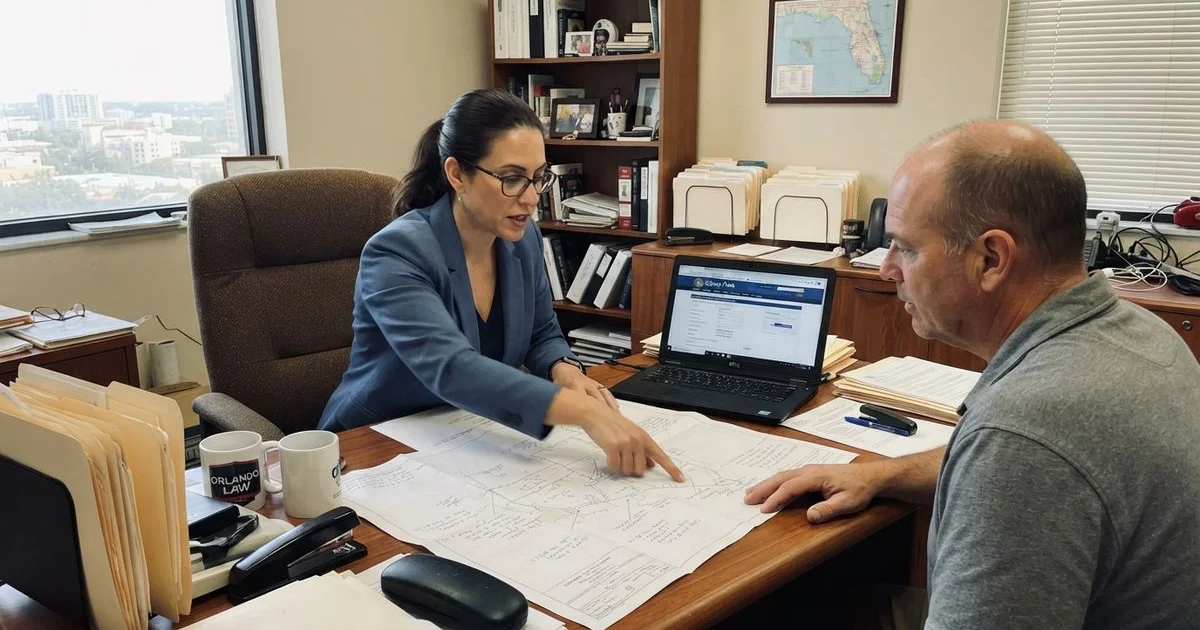
Quiet title is one of those legal phrases that sounds intimidating until someone explains what it actually solves. It’s a court action that settles, once and for all, who owns a piece of property, and it clears away any competing claims, old liens, or gaps in the paper trail that are muddying the title. If you’ve ever heard a closing get delayed because of a “title defect,” a quiet title action is often the fix for that exact problem.
When people in Orlando Metro actually need one
A handful of situations tend to trigger the need for this kind of case:
- Inherited property with unclear ownership. A house passed down through a family, sometimes across generations, without every heir formally recorded on the deed, or without a clean probate process.
- Old liens or mortgages that were never released. A previous owner paid off a loan decades ago, but the satisfaction of mortgage was never recorded, so the lien technically still shows up on a title search.
- Boundary or survey disputes. A fence, driveway, or improvement sits partly on a neighboring parcel, and the paper description of the property line doesn’t match reality.
- Tax deed sales. A property bought at a Florida tax deed sale often needs a quiet title action before a buyer can get standard title insurance and resell it.
- Foreclosure-adjacent disputes. Questions about whether a lender’s assignment of mortgage was properly recorded, or whether the party foreclosing actually holds a valid interest, sometimes intersect with quiet title claims.
How the process generally works
The homeowner (or whoever is trying to establish clear ownership) files a lawsuit in circuit court naming everyone who might have a competing claim: prior owners, heirs, lienholders, or anyone else showing up in the chain of title. Unknown or hard-to-find parties are often served by publication, a legal notice run in a local newspaper, since a court can’t always track down every possible claimant directly.
If nobody responds or contests the claim, the case can move to a default judgment relatively quickly. If someone does show up and dispute it, the case turns into a more typical piece of litigation with discovery, hearings, and possibly a trial before a judge issues a ruling on ownership.
| Case type | Typical path | Rough timeline |
|---|---|---|
| Uncontested, no competing claims respond | Default judgment | A few months |
| Missing or unknown heirs, served by publication | Waiting period, then default | Several months |
| Contested, another party disputes ownership | Discovery and hearings | Often a year or more |
What it tends to cost
Quiet title actions involve court filing fees, the cost of publishing legal notice when parties can’t be located directly, and attorney fees that scale with how contested the case gets. An uncontested case with a straightforward title defect generally costs less than a case where another party actively fights the claim through hearings or trial. Ask any real estate litigation attorney you’re considering for a written estimate that separates court costs from their fee, and ask what happens to that estimate if the case turns contested partway through.
Title insurance and why this matters at resale
A cloud on title, whatever caused it, typically shows up during a title search when the property is sold or refinanced. Most title insurers won’t issue a clean policy over an unresolved defect, which means the sale can stall right at closing unless the issue was already cleared. That’s why a quiet title action often gets filed proactively, well before a sale is planned, rather than as an emergency fix once a buyer’s closing is already at risk. Sorting it out ahead of time also tends to be calmer and less expensive than trying to resolve it under a closing deadline with a buyer waiting.
Finding the right attorney for this
Not every real estate lawyer handles quiet title cases regularly, since it’s a narrower specialty within real estate litigation. When you’re comparing firms, ask how many quiet title actions they’ve filed in your county’s circuit court, whether they’ve handled cases involving service by publication, and what their process looks like if an unexpected claimant surfaces mid-case. Our directory home lists attorneys covering this and related property disputes across Orlando Metro, and our scoring methodology explains how we weigh experience and client feedback for each listed firm.
This is general information about how quiet title actions typically work in Florida, not legal advice about your specific property. Title issues can be more tangled than they first appear, so a licensed attorney who has actually reviewed your title history is the only reliable source for next steps.
Questions people ask
- What does a quiet title action actually do?
- It asks a court to rule on who legally owns a property, clearing away competing claims, old liens, or defects in the recorded history so the title is marketable again.
- How long does a quiet title case take in Florida?
- Uncontested cases can resolve in a few months once everyone with a possible claim has been notified. Contested cases, where someone shows up to dispute ownership, can run well past a year.
- Do I need a quiet title action if I inherited a house?
- Often, especially if the property passed outside of a clean probate process, if there are multiple heirs, or if old liens or a prior owner's mortgage never got properly released from the title.
- Can a quiet title action stop a foreclosure?
- Not directly. It settles who owns the property, which can matter a great deal in a foreclosure dispute (for example, questioning whether the foreclosing party actually holds the loan), but it is a separate legal action with its own timeline.