Inheriting a house already in foreclosure: what heirs need to know
By Elena Haddad · Updated 2026-08-15
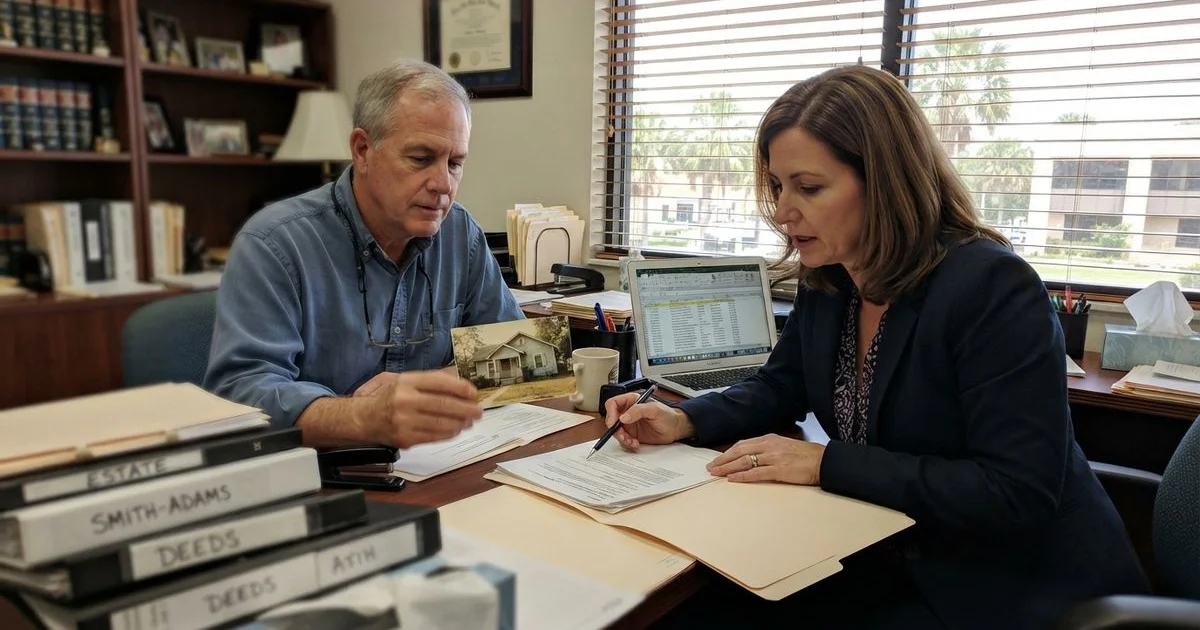
Inheriting a house is supposed to be a gift, but it can turn into a legal puzzle fast if the property was already behind on payments or in an active foreclosure case when the owner passed away. Here’s what heirs in Orlando Metro typically need to sort through first.
You generally aren’t personally on the hook for the mortgage
An heir doesn’t automatically become personally liable for a deceased relative’s mortgage debt just by inheriting the property. The mortgage is secured by the house itself, so the practical question becomes what happens to that specific asset, not whether your personal finances are exposed to the debt.
Probate and foreclosure can run at the same time
A common misconception is that probate pauses a foreclosure case. It typically doesn’t. The lender can continue pursuing the foreclosure while the estate moves through probate, which means the clock doesn’t stop just because ownership is being sorted out. The estate’s personal representative (sometimes called an executor) usually needs to be substituted into the foreclosure case to represent the estate’s interest going forward.
Your realistic options as an heir
| Option | When it makes sense |
|---|---|
| Bring the loan current or negotiate a modification | You want to keep the house and can afford ongoing payments |
| Refinance the loan into your own name | You qualify for a new loan and want sole ownership |
| Sell the house, even mid-foreclosure if there’s equity | Multiple heirs, or nobody wants to keep the property |
| Let the foreclosure proceed | No heir wants or can afford the property |
None of these are automatic. Each requires coordinating with the estate’s personal representative and, in most cases, the probate court.
Understanding whether there’s actually equity worth saving
Before deciding how much effort to put into keeping an inherited property, it’s worth getting a realistic sense of what it’s actually worth against what’s owed. A house with significant equity above the mortgage balance is worth fighting to preserve or sell properly. A house that’s deeply underwater, worth less than the debt against it, may not be worth the cost and stress of a modification attempt for an heir who wasn’t planning to live there anyway. This is a practical, unemotional calculation worth making early, separate from any feelings about the property itself.
Reverse mortgages complicate this further
If the deceased relative had a reverse mortgage rather than a traditional loan, the situation for heirs works differently: reverse mortgages typically become due upon the borrower’s death, and heirs generally need to either pay off the loan, refinance it, or sell the property within a set window, often around six months with possible extensions. If you’re not sure what kind of loan is involved, pulling the mortgage documents or asking the servicer directly clears this up fast and changes what options are actually on the table, so this is worth confirming before you make any other decisions about the property.
When title itself is the problem
Sometimes the bigger obstacle isn’t the mortgage default, it’s that ownership was never cleanly transferred, especially with older properties passed down informally across a family over years. If multiple potential heirs exist or the chain of ownership has gaps, a real estate litigation attorney may recommend resolving title through a quiet title action before any sale or refinance can move forward cleanly, since a buyer’s title insurer will flag the same gap eventually anyway.
Acting quickly matters
Foreclosure timelines don’t pause for grief or family logistics. If you’ve just learned a house you’re set to inherit is behind on payments, contacting an attorney early, even before probate is fully underway, gives you more room to explore options like a modification or a sale before a judgment and sale date lock things in. Browse attorneys who handle these overlapping estate and foreclosure situations from our home page, and see our methodology for how listed firms are scored.
This is general information, not legal advice about your specific estate or property. Probate and foreclosure rules interact in ways that depend heavily on your county and case specifics, so an attorney reviewing your documents directly is the only reliable next step.
Questions people ask
- Am I personally liable for a deceased relative's mortgage?
- Generally no, an heir isn't personally liable just for inheriting the property. The mortgage is a debt of the estate and secured by the house itself, not a personal debt automatically transferred to you.
- Does foreclosure stop while an estate goes through probate?
- Not automatically. A lender can generally continue a foreclosure case even during probate, though the estate's personal representative typically needs to be involved in the case going forward.
- Can I keep the house if I inherit it with a foreclosure already in progress?
- Sometimes, if you can bring the loan current, negotiate a modification, or refinance it into your own name. Whether this is realistic depends on your finances and how far along the foreclosure case already is.
- What if there are multiple heirs and we don't agree on what to do?
- This is common and can slow everything down. An attorney can help sort out decision-making authority among heirs and may recommend a quiet title action if ownership isn't clearly settled.