Helping an aging parent facing foreclosure in Orlando Metro
By Elena Haddad · Updated 2026-08-09
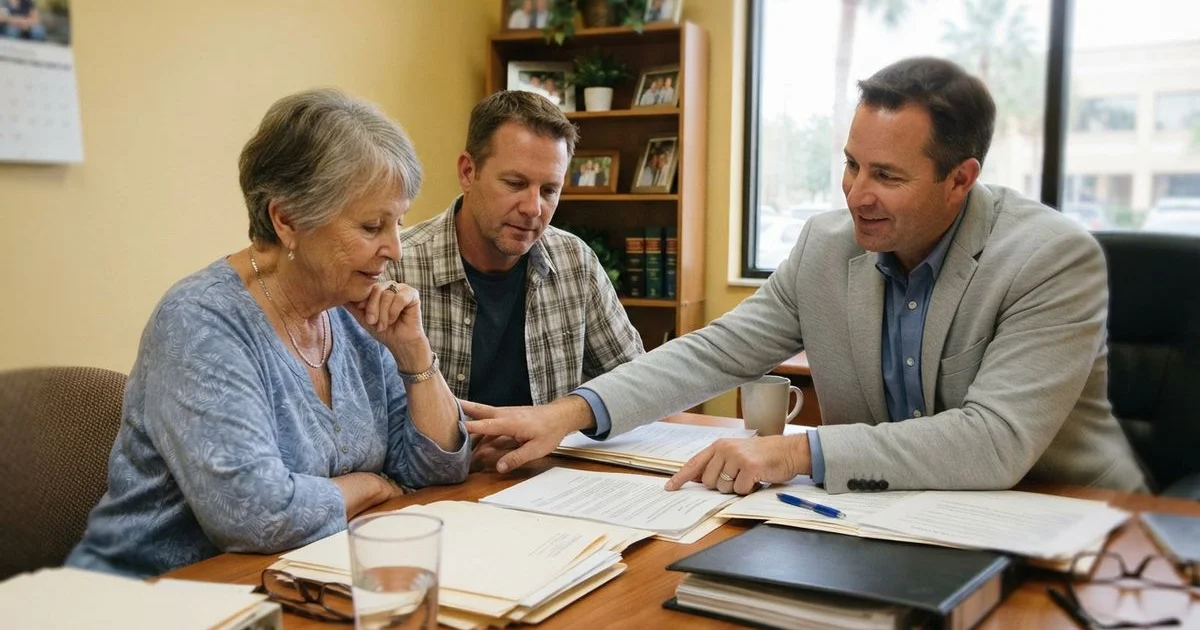
Finding out a parent is behind on their mortgage is unsettling, especially when it comes up unexpectedly, a stack of unopened mail, a phone call from a collector, or a parent who finally admits things have gotten hard. Helping without taking over completely, and without overstepping legal boundaries, takes a bit of care.
Start with the legal authority question
Mortgage servicers and attorneys generally can’t discuss your parent’s account with you unless your parent authorizes it directly, or you hold a power of attorney covering financial matters. If your parent is willing, ask the servicer what specific authorization form they need. If a broader pattern of memory or decision-making difficulty is part of the picture, this may also be the moment to discuss a more formal power of attorney with an elder law or estate attorney, separate from the foreclosure issue itself.
Have the money conversation gently
Many older homeowners feel embarrassed about falling behind, especially if pride or a lifetime of self-sufficiency is part of their identity. Leading with concern rather than frustration, and framing the conversation around wanting to understand the full picture so you can help, tends to get further than demanding financial transparency outright.
Watch for foreclosure rescue scams
Seniors are frequently targeted by companies promising to stop a foreclosure for an upfront fee, or asking a homeowner to sign over the deed “temporarily” as part of a supposed rescue plan. If your parent has been contacted by anyone like this, treat it as urgent: a real attorney or housing counselor doesn’t need secrecy, doesn’t demand large upfront fees for a guaranteed outcome, and doesn’t rush a signature.
| Red flag | What it usually means |
|---|---|
| Upfront fee for a guaranteed loan modification | Likely a scam; legitimate help rarely guarantees outcomes |
| Request to sign over the deed “temporarily” | A common tactic in rescue scams, can mean losing the house outright |
| Pressure to decide immediately | Legitimate options rarely require an instant decision |
| Unsolicited contact claiming to represent the lender | Verify directly with the servicer using a known phone number |
Balancing your parent’s independence with your concern
Even when you’re genuinely trying to help, it’s worth remembering the house and the decisions about it still belong to your parent, unless a formal legal arrangement says otherwise. Involving your parent in every conversation with an attorney or servicer, rather than handling things entirely on their behalf, respects their autonomy and also tends to produce better outcomes, since they’re the one who knows the full history of the loan and the household finances.
Siblings and shared decision-making
If you have siblings, it helps to agree early on who’s taking the lead on coordinating with attorneys and servicers, so your parent isn’t fielding conflicting advice or repeating the same information to multiple family members. Disagreement among siblings about the right path, sell, modify, or fight the case, is common and usually resolves faster with a neutral attorney laying out the actual options than with family members debating it alone at the kitchen table. If the disagreement isn’t about strategy but about who legally owns the house down the line, our guide on inheriting a house already in foreclosure covers what happens when multiple heirs are involved.
Deciding what role you can realistically play
Not every adult child is in a position to take on a parent’s mortgage payments, and that’s okay. Sometimes the most useful thing you can do is help set up the first call with an attorney, sit in on the consultation if your parent wants company, or help organize the paperwork a case actually needs. A foreclosure defense attorney can lay out realistic options once they see your parent’s full financial picture, whether that’s a modification, a sale, or another path.
Helping a parent through this doesn’t mean solving it alone. Getting a knowledgeable attorney involved early, with your parent’s input and consent, is often the single most useful thing you can help arrange. Browse attorneys who handle foreclosure and elder-related matters from our home page, and see our methodology for how listings are scored.
This is general information, not legal advice. Power of attorney rules and elder law protections vary by situation, so an attorney familiar with both foreclosure and elder law is the best resource for your parent’s specific case.
Questions people ask
- Can I talk to my parent's mortgage servicer on their behalf?
- Usually only with your parent's written authorization, or if you hold a valid power of attorney covering financial matters. Ask the servicer directly what documentation they require before they'll discuss the account with you.
- What if my parent doesn't want to tell me how bad things are?
- This is common. A gentle, non-judgmental approach, focused on wanting to help rather than criticize, tends to open the door more than pressing for full financial details right away.
- Should I pay my parent's mortgage to stop a foreclosure?
- It can buy time, but it doesn't address the underlying problem if the payments aren't sustainable going forward. Talk to an attorney about whether a modification or other structural fix makes more sense before committing to ongoing payments yourself.
- How do I know if my parent is being scammed by a foreclosure rescue company?
- Watch for anyone asking for upfront fees to guarantee a loan modification, asking your parent to sign over the deed, or pressuring a quick decision. Legitimate help doesn't require secrecy or urgency tactics.